
What My Hyper Independence Says About Me
How my biggest strength has quickly become my biggest cage.

I’ve been thinking a lot about hyper independence lately. How it looks like strength on the outside but actually feels like loneliness underneath. How the freedom I built my life around might actually be another version of captivity.
Childhood
When I was a child, no one really stopped to ask how I felt. If they noticed something was wrong, they didn’t pause to comfort. They paused to critique. I was too sensitive, too cool, too much. They called me the rebel, the wild one, the one trying too hard.
But no one asked why I was trying so hard. No one saw that I was being bullied, or touched in ways I didn’t understand, or chased home by boys who scared me. No one asked how unsafe I felt in my own skin.
They kept me in places that weren’t safe, physically or emotionally, and then labelled me for how I reacted. They mistook pain for performance.
So I learned early. Don’t expect to be protected. Don’t show weakness. Don’t let anyone see the soft parts because they’ll either ignore them or use them against you.
That’s how my independence began. It wasn’t confidence. It was survival.
When your emotions aren’t met with care or comfort, you adapt. You become the strong one, the one who doesn’t ask for anything. And people love you for it. They call you mature and capable and self sufficient. They don’t see that every compliment builds the walls a little higher.
Building a Life Away From Them
All I ever wanted was to get away. To earn enough, prove enough, be enough so I would never have to ask them for anything again. And I did that. I got out.
But when you build a life around rebellion, the walls you build to keep them out also keep you in. Even now, I catch myself still living inside the rules they created. Still measuring my worth through their eyes. Still chasing freedom that’s built on their approval.
I thought I was building my own life. But really, I was just trying to win at their game. And honestly, I don’t know what life looks like beyond that yet.
Motherhood
Motherhood has been the hardest mirror.
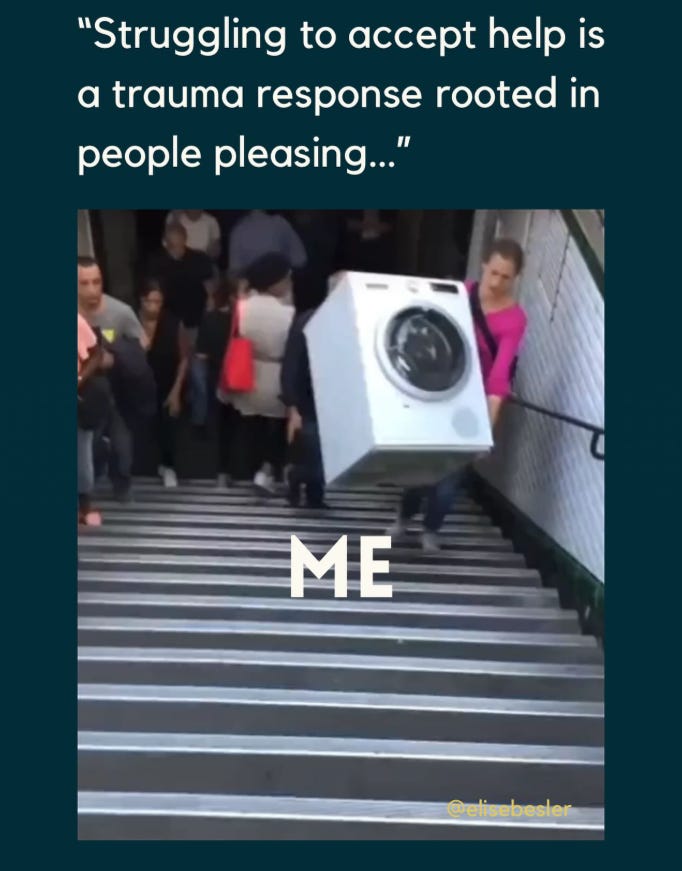
My son is almost three, and I still can’t ask for help without feeling like I’ve failed. Even with my husband, I hesitate before saying I’m exhausted. I feel guilty for resting. Guilty for having help. Guilty for not doing more.
It’s not really about motherhood. It’s about wiring. About the part of me that still believes I only deserve love when I’m holding everything together.
But I’m learning, slowly. That my son doesn’t need a mother who does it all. He needs one who knows how to stop. Who can rest. Who can receive without shame.
Work and Worth
I’ve carried these patterns into my work too. My dad still asks the same most infuriating questions every time we talk: Do they like you at work? Are you doing well? Are you being praised? It’s never about how I’m feeling. Always about how I’m performing.
So I learned to measure my worth through other people’s approval. Even after having my son, I couldn’t stop. I worked through my pregnancy. At three months postpartum, I joined a new job. At eight months, I moved countries for another one. I gave it everything because I don’t know how not to.
And now here I am, going through the biggest burnout of the century. But I won’t tell anyone. I’ll smile through it, hold it together, and figure it out on my own. Because that’s what I do. That’s what I’ve always done.
This is what real loneliness looks like. Breaking down in silence while the world applauds your strength.
Rock Bottom
Sometimes it’s good when everything hits rock bottom. Because that’s when you finally stop and start thinking about your life. That’s where I am now. Somewhere between breaking and rebuilding.
And I have to thank motherhood for that. It’s the toughest thing I’ve ever gone through, but also the reason I’m changing. It’s forcing me to question everything I believed about strength and success and survival.
It’s showing me that what I used to call resilience was actually emotional neglect in disguise.
Learning to Be Free Again
Sometimes I think about that little girl who was never comforted. How she turned every bruise into a promise: I’ll never need anyone again. And how that promise built a life that looks like freedom but doesn’t feel like peace.
Now I’m learning something different. A kind of freedom that allows me to rest, to need, to receive. Because real freedom isn’t about doing everything yourself. It’s about knowing you don’t have to.
If you grew up proud of doing everything alone, maybe ask yourself what that pride is protecting. Maybe independence isn’t the goal at all. Maybe the real work is learning how to let someone in.
I grew up in a same kind of environment. My parents are boomers. Their generation have a collective mindset. Show no emotion, follow the path that everybody is taking, if you fail at it you're a disappointment. It's not even their fault. I don't think, they're even aware of that's how they think. Emotional availability was not a part of their parent plan. For the past five years, I have been working on my mental health, undoing everything other people had done. And I realised that I can't wait for someone to come and comfort me, be gentle with me. I'll always have that internal need but I have to be that person for myself. I have to be the parent that I always deserved. I started becoming gentle with myself and it's making some progress. I hope it does to you as well.
I relate a lot to this article